

Application opens soon!
Don’t miss out on this opportunity to apply for the fully-sponsored IC Design and Embedded Systems program and start your career in semiconductor industry.
NSEP
National Semiconductor Excellence Program
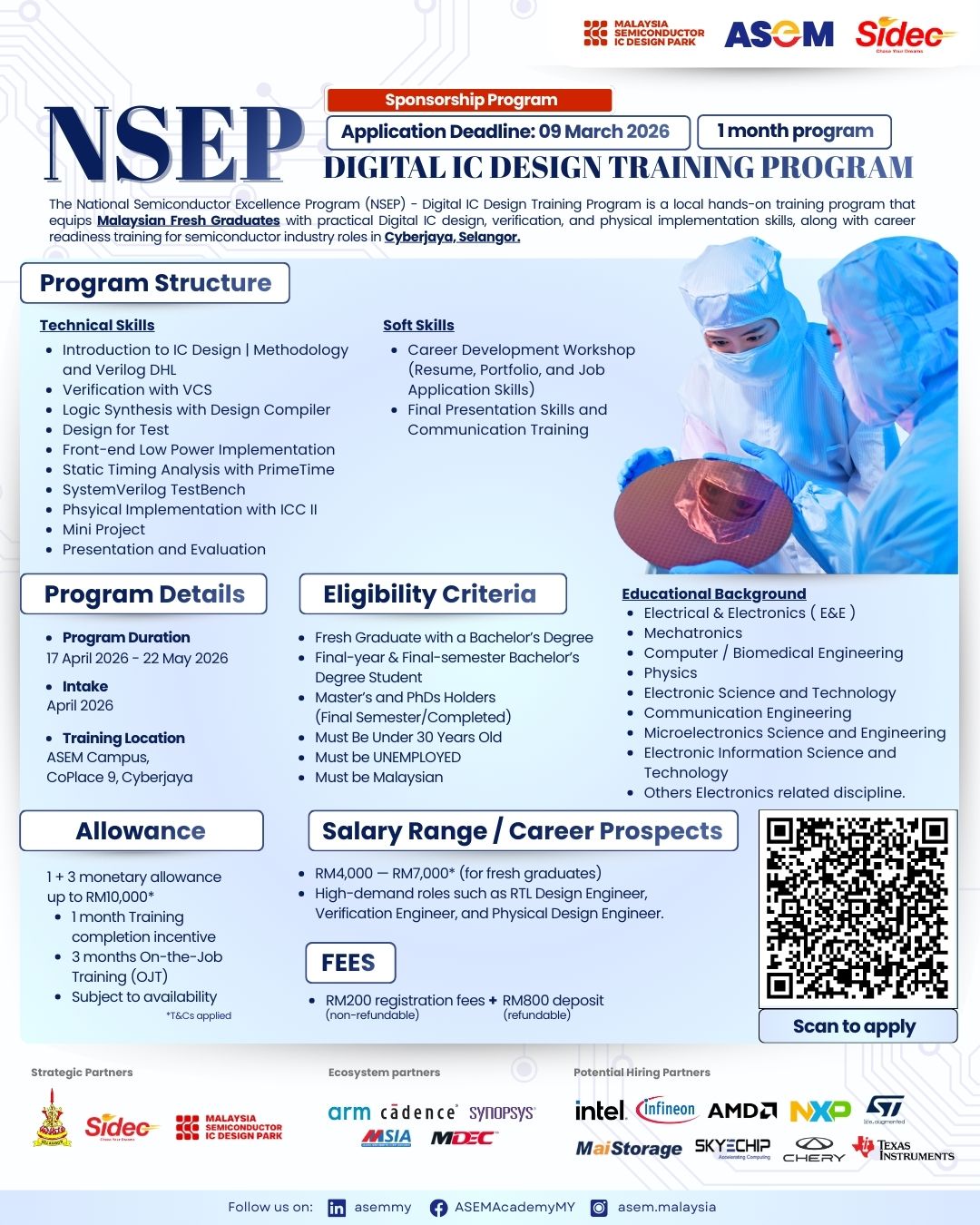
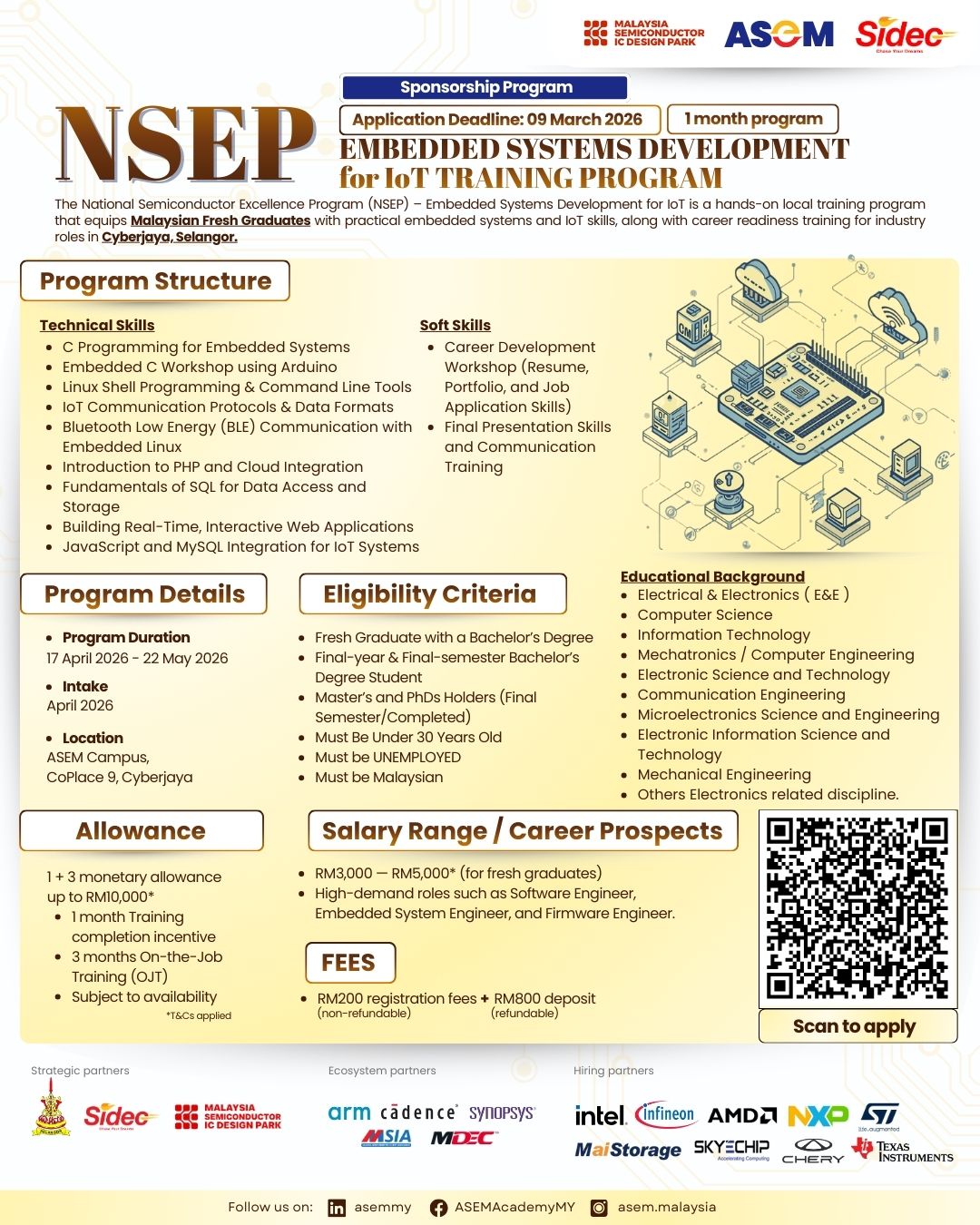
Industry-aligned national training programs focused on IC Design and Embedded Systems, developed to equip participants with strong technical foundations, real-world exposure, and clear industry pathways.
Strengthening local talent for future technology industries.
OPENING SOON: April 2026 Intake
Course Details
FULL TIME
1 Month Classroom
3 Months On Job
Training
April - May 2026
Allowances up to RM10,000
*Subject to T&C and Availability
ABOUT ASEM
Why Choose ASEM?
Industry-aligned courses in semiconductor IC design, test and packaging, and AI, to ensure students gain practical, job-ready skills.
Access to world-class labs and tools enhances learning, research, and industry readiness.
Partnerships with 100+ companies provide internships, collaborative projects, and direct job opportunities.
Clear pathways to high-demand, well-paying careers with strong job placement support.
International training and research collaborations with top institutions worldwide.
Contribute to Malaysia’s rise as a global tech leader while boosting academic and industry reputation.
Eligibility
Who Can Apply?
- Malaysian
- Fresh Graduate in:
- Electronic & Electricals (E&E)
- Electronic Science and Technology
- Communication Engineering
- Microelectronics Science and Engineering
- Electronic Information Science and Technology
- other electronics-related discplines
- Unemployed Individual below age of 30
Screening Process
- Mini-Exam: Topics include Digital Logic, Analog Circuits, General Programming, and Semiconductor Electronics
- Interview: Focused on the theme “Getting to Know You”
Program Deposit
- A refundable deposit of RM1,000 is required
- All deposits will be fully refunded upon successful completion of the program
Eligibility Criteria
Training @ ASEM
Our NSEP Programs
IC Design
Learning Outcomes
-
Apply digital IC design methodologies using Verilog HDL and industry-standard front-end workflows across design, verification, synthesis, and implementation stages.
-
Perform functional verification and timing analysis using SystemVerilog testbenches, VCS, and PrimeTime to validate design correctness and timing closure.
-
Execute synthesis, DFT, and optimization tasks with Design Compiler and front-end low-power techniques to improve performance and manufacturability.
-
Demonstrate end-to-end IC design capability by completing and presenting a mini-project that integrates verification, synthesis, timing, and physical design using ICC II.
Program Modules
- Introduction to IC Design | Methodology and Verilog HDL
- Verification with VCS
- Logic Synthesis with Design Compiler
- Design for Test
- Front-end Low Power Implementation
- Static Timing Analysis with PrimeTime
- SystemVerilog TestBench
- Physical Implementation with ICC II
- Mini Project
Pre-Requisites
Students are expected to have basic knowledge and understanding of:
- Semiconductor Devices
- Digital Logic
- Digital Logic Design
- VLSI (Microelectronics)
- Computer Architecture
Potential Career Paths
- Digital IC Design Engineer
- ASIC / SoC Design Engineer
- RTL Design Engineer
- Verification Engineer (VLSI / Digital)
- DFT / Test Engineer
- Physical Design Engineer (Entry-level)
- Semiconductor Design Support / CAD Engineer
- Graduate IC Design Engineer / Trainee VLSI Engineer
Embedded Systems for IoT
Learning Outcomes
-
Develop embedded and IoT applications by programming microcontrollers in C, interfacing sensors and peripherals, and implementing Bluetooth Low Energy communication and standard IoT protocols.
-
Operate and automate Linux-based environments using command-line tools, shell scripting, and virtualized platforms for software deployment and system testing.
-
Build full-stack IoT-enabled solutions by developing dynamic web interfaces with JavaScript and integrating PHP, MySQL, and SQL databases for real-time data storage and visualization.
-
Demonstrate job-ready competencies through hands-on projects aligned with entry-level roles in embedded systems, IoT application development, systems programming, and web development.
Program Modules
- C Programming for Embedded Systems
- Embedded C Workshop
- Introduction to Linux - Command Line Power
- Linux Shell Programming
- Bluetooth Low Energy Communication with Embedded Linux
- IoT Communication Protocols and Data Formats
- Introduction to PHP
- Fundamentals of Database Access with SQL
- Data Storage and Access with MySQL and PHP
- Fundamentals of JavaScript
- Developing Realtime, Interactive Webpages
Pre-Requisites
Students are expected to have basic knowledge and understanding of:
- C Programming
- Linux
Potential Career Paths
- Embedded Systems Engineer
- Firmware Engineer
- IoT Engineer
- Embedded Software Developer
- Junior Linux Systems Engineer
- Hardware–Software Integration Engineer
- Test & Validation Engineer (Embedded)
- Graduate Embedded / Firmware Engineer
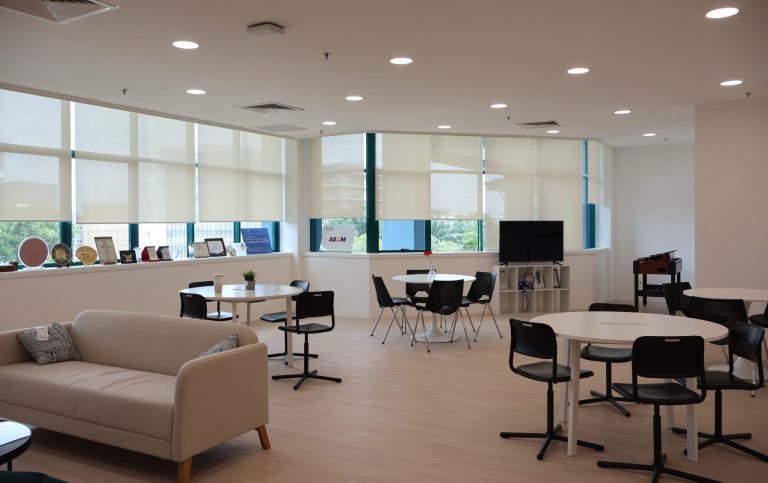
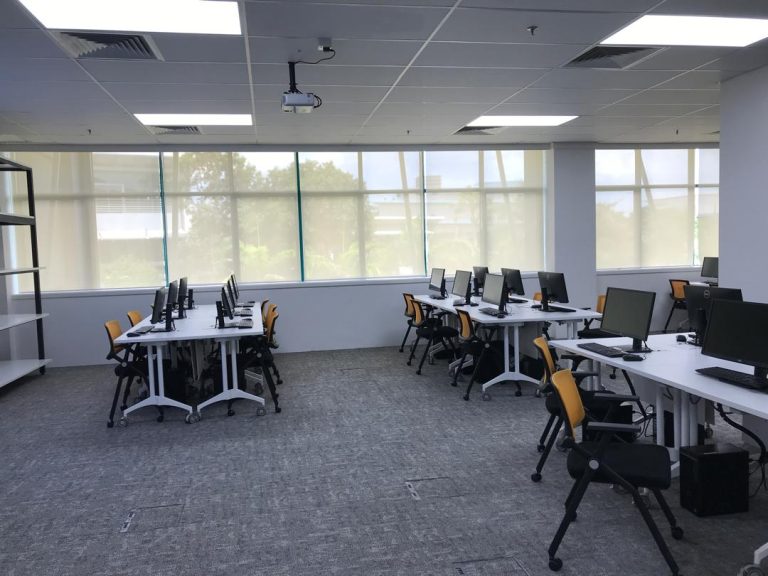
Facilities
Facilities Included

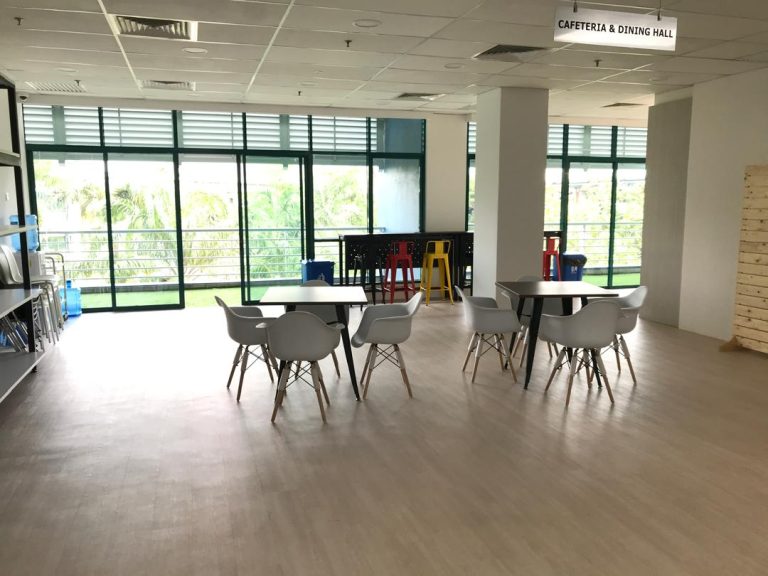
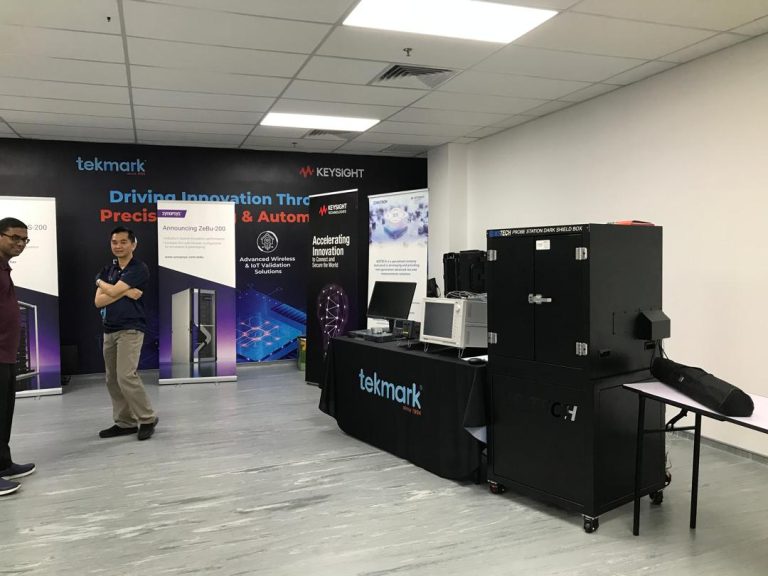
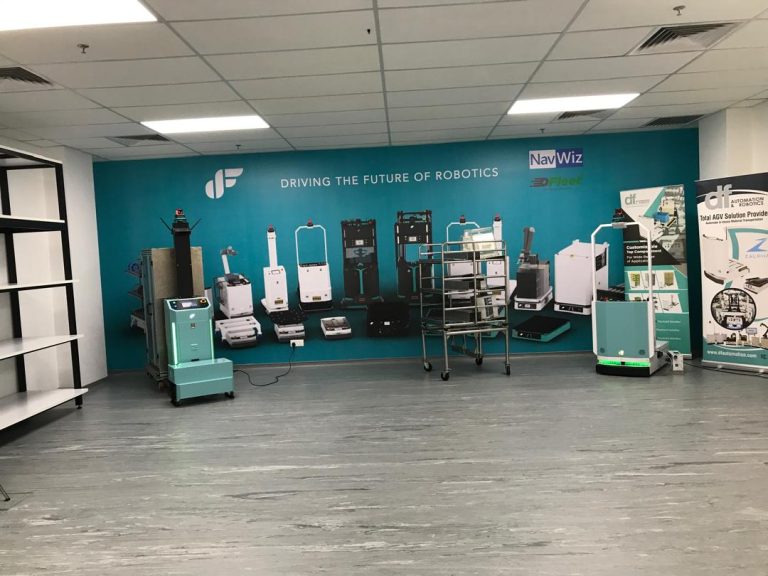
Timeline
Your Registration Timeline
Apply to your program of choice
Submit your application by selecting your preferred program and completing the required details.
What to expect next:
Eligible applicants will be shortlisted for the entrance examination
Demonstrate your fundamentals
Shortlisted candidates will receive and exam link via email. The assessment evaluates core technical fundamentals relevant to your chosen program.
What to expect next:
Results will be reviewed, and successful candidates will proceed to the offer stage.
Confirm your placement
Qualified applicants will receive a Letter of Offer via email. This confirms your placement and includes key details on the program structure and next steps.
Action required:
Accept the offer within the stated timeline to secure your slot.
Prepare for your learning journey
Once confirmed, you'll receive onboarding details including schedules, preparation guidelines, and communication channels.
You're officially in.
Get ready to begin your training and industry exposure.
Frequently Asked Questions
NSEP FAQs
- Q: Is accommodation and transportation provided for free?
A: No. Only the training cost is sponsored. Breakfast and lunch are provided, but accommodation and transportation are not included.
- Q: Is any allowance provided during the training?
A: Allowances are provided under the K-Youth collaboration up to RM10,000. *Subject to availability
- Q: Do I need to pay any fees?
A: Yes, you must pay a RM200 registration free + RM800 commitment deposit (refundable). The commitment deposit will be refunded upon successful completion of the program.
- Q: I am interested in joining the program but cannot afford the deposit. What should I do?
A: You may appeal through the Student Affairs Department after receiving your offer letter.
- Q: Do I need to attend the full 1-month of training? Can I skip classes?
A: Attendance is compulsory for the full program duration. Absences are extremely discouraged.
- Q: Will job placement be provided after completing the training? What is the process?
A: No, ASEM will assist you in landing more interview opportunities by directly sharing your resume and class performance. You are also encouraged to find opportunities yourself to double the chances
- Q: If I secure a job before the program completion, do I still have to participate On-Job Training?
A: Yes, the on-job training is a mandatory segment of the program. Please inform your hiring manager to make sure your staring date is after on-job training ends.
- Q: If I am shortlisted by an employer, do I still need to attend their interview even though I have already interviewed with ASEM?
A: Yes. The ASEM interview is only for program admission. You must attend the employer’s interview for job placement.
Venue

Advanced Semiconductor Academy of Malaysia
Level 2, CoPlace 9
Block 2320, Century Square, Jalan Usahawan, Off,
Persiaran Multimedia, Cyberjaya, Selangor
63000
Malaysia
Enroll